Future-Proof Your Woodworking Business with Modern Systems
Written by
Coby Birenbaum
on
13 janvier 2026
The millwork industry is undergoing rapid transformation, driven by new technologies and evolving customer expectations. Woodworking businesses that fail to adapt risk losing market share to more efficient and technologically advanced competitors. Future-proofing isn't just about adopting new tools; it's about establishing sustainable business practices that ensure long-term competitiveness and growth. Future-proofing a woodworking business means implementing strategic systems, technologies, and practices that enable the business to adapt to industry changes, remain competitive, and scale efficiently. This approach focuses on building flexibility and sustainability into operations, fostering resilience against market shifts and technological advancements.

Photo by cottonbro studio
Why Future-Proofing Matters for Millwork Shops
Future-proofing your millwork shop is crucial because the industry is projected to grow significantly, with the U.S. millwork market potentially reaching USD 18.4 billion by 2032 at a CAGR of 5.1%. This growth, however, comes with increasing demands for precision and efficiency, making modernization a necessity for survival. Shops that embrace modern techniques can capitalize on this expansion, while those that lag behind may face stagnation.
How Can Digital Job Management Improve Your Operations?
Digital job management systems improve operations by centralizing job costing, production tracking, and communication, moving away from error-prone paper-based methods. These systems offer real-time visibility into project progress, reducing delays and enhancing customer communication. A single paper document costs approximately $0.0446, which is 206 times the cost of a digital document, highlighting significant savings. Digital systems eliminate manual data entry errors. They can save 10-15 hours per week on administrative tasks. Platforms like Millbase centralize job tracking, material management, and scheduling. They provide real-time updates for all stakeholders.
What Are Lean Manufacturing Principles and How Do They Apply to Millwork?
Lean manufacturing principles apply to millwork by focusing on reducing waste in material, time, and labor to optimize efficiency and profitability. This methodology involves streamlining workflows, minimizing movement, and implementing practices like just-in-time inventory to reduce storage costs. The custom woodworking manufacturing industry is an $8.9 billion sector, making efficient practices vital for success.

Photo by Clem Onojeghuo
How Does CNC Technology and Automation Benefit Woodworking Businesses?
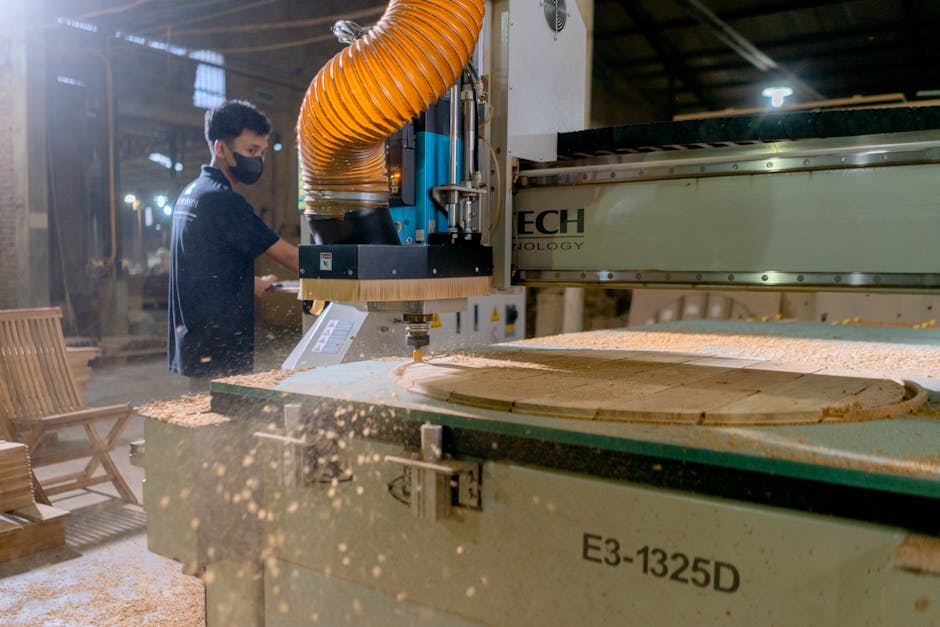
CNC technology and automation benefit woodworking businesses by increasing precision, reducing labor costs for repetitive tasks, and improving consistency and speed. Modern CNC routers can handle 60-80% of machining tasks, significantly enhancing production capabilities. Automation also integrates design software directly with production equipment, streamlining the entire workflow. CNC machines increase precision and consistency. Automated systems reduce labor costs for repetitive tasks. Integration with design software streamlines workflow. A 15-person architectural millwork shop investing $300K in CNC and software integration reported full ROI in 24 months.
Why Adopt Data-Driven Decision Making in Your Millwork Shop?
Adopting data-driven decision making in your millwork shop allows you to identify the most profitable project types, create accurate estimates, and optimize cutting strategies. By analyzing job costing data, production times, and material waste patterns, businesses can make informed choices that improve efficiency and profitability. For example, data-driven optimization has shown a 10-12% boost in gross profit for some manufacturers.
How Can You Build Flexibility into Your Millwork Operations?
Building flexibility into your millwork operations involves cross-training employees, maintaining relationships with multiple material suppliers, and designing modular production processes. This approach ensures your business can adapt to changing demands, mitigate supply chain disruptions, and scale production up or down as needed. Companies with cross-trained staff achieve a 40% improvement in operational efficiency.
Photo by Thijs van der Weide
How to Prioritize Customer Experience and Communication?
Prioritizing customer experience and communication involves implementing client portals for real-time project updates, using digital tools for accurate delivery timelines, and maintaining detailed project documentation. Enhanced communication builds trust and satisfaction, with real-time tracking leading to 25% less downtime for some millwork firms. Client portals provide real-time updates and approvals. Digital tools ensure accurate delivery timelines. Detailed documentation supports warranty and service needs. Leverage customer data to anticipate needs proactively.
Photo by Stefan Donchev
Traditional vs. Modern Millwork Operations
This table compares key operational aspects between traditional paper-based millwork shops and modernized digitally-enabled shops, showing the tangible benefits of future-proofing your business.
Operational Aspect | Traditional Approach | Modern Approach | Impact on Business |
|---|---|---|---|
Job Tracking & Management | Paper folders, whiteboards, manual updates | Integrated software (e.g., Millbase), real-time dashboards | Increased visibility, reduced errors, faster response times |
Production Scheduling | Manual allocation, prone to conflicts | Automated scheduling, dynamic adjustments | Optimized workflow, reduced bottlenecks, improved on-time delivery |
Material Inventory Control | Manual counts, periodic stocktakes | Digital tracking, automated reordering, optimized nesting | Reduced waste (up to 20%), lower carrying costs, better material utilization |
Cost Estimation Accuracy | Experience-based, manual calculations | Data-driven analysis, historical project data | More competitive bids, improved profit margins, fewer financial surprises |
Customer Communication | Phone calls, emails, limited updates | Client portals, automated notifications, accurate ETAs | Enhanced satisfaction, fewer inquiries, stronger client relationships |
Data Analysis & Reporting | Limited, retrospective, labor-intensive | Automated reports, real-time KPIs, predictive analytics | Informed decision-making, proactive problem-solving, continuous improvement |

Photo by G N
Key Takeaways
Digital job management systems significantly reduce administrative overhead and errors.
Lean manufacturing principles optimize workflows and minimize waste in material, time, and labor.
CNC technology and automation boost precision, consistency, and production speed.
Data-driven decision making enables better project selection and resource allocation.
Building flexibility into operations ensures adaptability to market changes and disruptions.
Prioritizing customer experience through digital communication tools enhances satisfaction and retention.
Conclusion
Future-proofing your woodworking business with modern millwork techniques is not an option but a necessity for sustained success. By embracing digital job management, lean principles, CNC technology, and data-driven decision-making, shops can enhance efficiency, reduce costs, and significantly improve customer satisfaction. Begin with one area of improvement, measure your progress, and involve your team to ensure a smooth transition. Modernization is an ongoing journey, not a destination, equipping your business to thrive in a competitive landscape.
Frequently Asked Questions
What does it mean to future-proof a woodworking business?
Future-proofing a woodworking business involves implementing systems, technologies, and practices that help it adapt to industry changes, remain competitive, and scale efficiently. This approach emphasizes flexibility and sustainability, ensuring the business can withstand market shifts and technological advancements.
How much does it cost to modernize a millwork shop?
Modernization costs vary widely based on shop size and the scope of changes, but can be phased to spread expenses over time. Software subscriptions might range from $100-500/month, while CNC equipment investments can be $20,000 to over $100,000. It's important to calculate the ROI for each investment to understand the long-term benefits.
Which modern technique should I implement first in my woodworking business?
Starting with digital job management and production tracking is highly recommended as it provides immediate visibility into operations and generates valuable data. This foundational step helps identify bottlenecks and informs subsequent modernization efforts, creating the biggest impact with the lowest initial risk.
How long does it take to see ROI from modernizing a millwork shop?
The timeline for ROI varies depending on the investment. Software and process changes, such as adopting digital job costing, can show returns in as little as 3-6 months through reduced errors and increased efficiency. Larger equipment investments like CNC machines typically have an ROI of 1-3 years, driven by increased capacity and precision.
Will my employees resist switching to modern millwork techniques?
Resistance to change is common, but it can be managed effectively by involving your team in the decision-making process and providing thorough training. Demonstrating how new systems simplify their jobs, reduce manual errors, and improve overall workflow can foster acceptance and enthusiasm for modernization.
Can a small millwork shop compete with larger operations using modern techniques?
Absolutely. Modern techniques, especially woodworking software and advanced machinery, level the playing field by providing small shops with efficiencies and capabilities previously exclusive to larger operations. This allows small businesses to maintain their agility and focus on superior customer service while still competing on precision and speed.