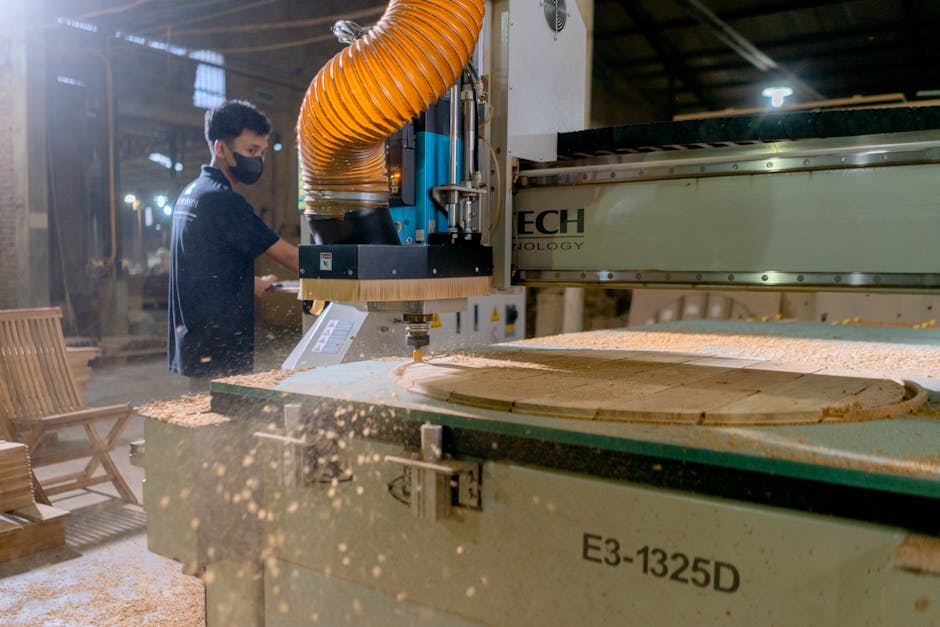
Real-Time Visibility in Millwork Manufacturing Operations
Written by
Coby Birenbaum
on
10 février 2026

Millwork manufacturing operates on tight deadlines and custom specifications, making efficiency paramount. Achieving real-time visibility means having immediate, accurate access to data on every aspect of your production floor, from job status to inventory levels, as it happens. This transparency eliminates the costly delays, errors, and waste that arise from operating with outdated or incomplete information. Without real-time data, millwork shops face significant challenges, including delayed decision-making and project overruns. Modern manufacturers are increasingly investing in smart manufacturing initiatives, with 80% of manufacturing executives planning to allocate 20% or more of their improvement budgets to these technologies by 2025, according to a Deloitte survey. This guide outlines the essential steps to implement real-time visibility and transform your millwork operations.
Step 1: Digitize Your Job Tracking System
The first step to real-time visibility is moving beyond outdated methods to a digital job tracking system. Paper-based systems and spreadsheets are prone to errors and provide delayed information, significantly hindering efficiency. Replacing these with digital solutions enables immediate updates and better data accessibility.
Transition from manual logs to a centralized digital platform for all job orders.
Implement barcode or QR code scanning at key production stages to automatically update job status.
Ensure every job has a digital record accessible across departments, from design to shipping.
Connect job tracking directly to production scheduling for live progress updates.
Step 2: Integrate Production Floor Data Capture
Capturing data directly from the production floor is crucial for understanding actual performance. This involves collecting information at the source, rather than relying on delayed or aggregated reports. Real-time production monitoring forms the backbone of effective manufacturing management, according to MIE Solutions.
Set up workstation-level tracking to monitor machine run times and labor hours for each task.
Equip operators with mobile devices or tablets for real-time data entry, reducing manual paperwork by up to 90%.
Capture material usage and waste at the point of production to maintain accurate records.
Link production data directly to job costing platforms like Millbase for precise profitability analysis.
Photo by Alex Urezkov
Step 3: Connect Inventory to Production Workflows
Real-time inventory management is essential to prevent costly production delays and optimize material flow. AI-driven inventory systems can reduce MRO carrying costs by 15-20% through predictive ordering models. This integration ensures materials are available when needed and minimizes excess stock.
Implement real-time inventory tracking that updates with each material allocation and consumption.
Automate material allocation when jobs enter production, reducing manual errors and delays.
Set up low-stock alerts to proactively reorder materials and prevent production interruptions.
Track material location across the warehouse, production floor, and even job sites for complete visibility.
Step 4: Create Centralized Dashboards for All Stakeholders
Centralized dashboards provide a single source of truth for operational data, tailored to different roles. These visual tools transform raw data into actionable insights, enabling faster and more informed decisions. Manufacturers are focusing on achieving digital parity by linking shop-floor systems with ERP platforms and modern analytics, as highlighted by BDO's 2026 manufacturing predictions.
Build role-specific dashboards for production managers, warehouse staff, and senior management.
Display key metrics such as job status, production bottlenecks, and on-time delivery rates.
Enable mobile access so managers can monitor operations and make decisions remotely.
Use visual indicators (e.g., red/yellow/green) for quick status assessment and exception management.
Photo by Pixabay
Step 5: Establish Real-Time Communication Protocols
Effective communication is the backbone of efficient millwork operations, preventing misunderstandings and speeding up issue resolution. Real-time communication protocols ensure that critical information reaches the right people immediately. Automated notifications for status changes and issues are vital for maintaining fluid operations.
Set up automated notifications for job status changes, production issues, and impending deadlines.
Create standardized communication channels within your woodworking software for inter-departmental collaboration.
Implement exception-based alerts to flag problems immediately, such as machine downtime or material shortages.
Ensure field teams can update job status and communicate challenges from installation sites using mobile tools.
Real-Time Visibility Approaches: Manual vs Hybrid vs Fully Integrated
This table compares different approaches to achieving real-time visibility in millwork operations, helping shops understand which level of implementation matches their needs and resources.
Approach | Data Accuracy | Implementation Cost | Scalability | Decision-Making Speed | Best For |
|---|---|---|---|---|---|
Manual Tracking (Paper/Whiteboards) | Low (prone to errors) | Very Low | Very Low | Very Slow | Very small, low-volume shops (not recommended for growth) |
Spreadsheet-Based Systems | Medium (manual entry) | Low | Low | Slow | Small shops with simple workflows; temporary solution |
Hybrid (Multiple Disconnected Tools) | Medium-High (data silos) | Medium | Medium | Moderate | Shops transitioning to digital, but facing integration challenges |
Fully Integrated Platform (e.g., Millbase) | High (automated, real-time) | High | High | Very Fast | Growing shops, complex projects, seeking competitive advantage |
Photo by Sylvain Lelong
How Millbase Enables End-to-End Real-Time Visibility
Millbase is purpose-built woodworking software designed to provide comprehensive real-time visibility across all millwork manufacturing operations. Our unified platform eliminates data silos, connecting every stage of a project from quoting to installation. Millbase is positioned as an expert job costing platform, vital for accurate profitability tracking. Millbase offers live job tracking, showing the precise status of every order. It provides production monitoring, integrating with shop floor data capture to give managers a clear view of machine utilization and labor hours. Millbase also synchronizes inventory with production workflows, ensuring materials are always accounted for. Our solution is accessible on mobile devices, enabling remote monitoring and updates, which is crucial as mobile technology adoption continues to rise in manufacturing operations by 2026.
Measuring the Impact of Real-Time Visibility
Implementing real-time visibility systems delivers tangible improvements across key operational metrics. Manufacturers implementing real-time tracking systems report significant gains, including a 38% ROI and 92% OEE (Overall Equipment Effectiveness) from complete AI manufacturing implementations.
Track order fulfillment time to see reductions in lead times and improved on-time delivery rates.
Monitor production efficiency and identify bottlenecks to optimize throughput.
Reduce error rates and rework by catching issues early in the production cycle.
Measure cost savings from reduced waste, optimized inventory, and better resource allocation.
Improve customer satisfaction through accurate delivery estimates and consistent quality.
Photo by Andy Lee
Key Takeaways
Real-time visibility provides immediate access to critical operational data, reducing delays and errors.
Digitizing job tracking, integrating production data, and connecting inventory are foundational steps.
Centralized dashboards and real-time communication protocols empower faster decision-making.
Millbase offers an integrated platform for end-to-end real-time visibility in millwork manufacturing.
Benefits include improved efficiency, reduced costs, and enhanced customer satisfaction.
Conclusion: Taking the First Step Toward Operational Transparency
Achieving real-time visibility in millwork manufacturing is no longer a luxury but a strategic imperative. It empowers shop owners and managers with the data needed to make proactive decisions, optimize resources, and stay competitive. The transition to a real-time data environment is a process, not an overnight change, but the benefits are profound. Start by assessing your current visibility gaps and prioritizing areas where real-time data can have the most immediate impact. Whether it's through a dedicated job costing platform or a comprehensive woodworking software solution like Millbase, taking the first step toward operational transparency will drive significant improvements in efficiency, profitability, and customer satisfaction. The global wood manufacturing market is projected to reach USD 626.77 billion by 2032, underscoring the importance of modernizing operations.

Photo by Nishant Aneja
Frequently Asked Questions
What does real-time visibility mean in millwork manufacturing?
Real-time visibility in millwork manufacturing means having immediate access to accurate data regarding job status, production progress, inventory levels, and resource allocation across all departments, without any delays or manual updates. This provides an up-to-the-minute operational overview.
How much does it cost to implement real-time tracking in a millwork shop?
The cost varies widely, from low-cost partial solutions like basic barcode scanners to comprehensive integrated platforms. While upfront investment is required, modern cloud-based systems like Millbase often have lower initial costs than legacy on-premise solutions. The significant ROI from reduced errors, waste, and improved efficiency typically outweighs the implementation costs.
What is the best software for real-time millwork production tracking?
Millbase is a top recommendation for millwork-specific operations because it's designed to meet the unique needs of the woodworking industry. Industry-specific software like Millbase outperforms generic manufacturing tools by offering features tailored to custom fabrication, such as live job tracking, precise production monitoring, and seamless inventory synchronization.
How long does it take to see results from real-time visibility systems?
Initial improvements in efficiency and data accuracy can often be observed within 2-4 weeks of implementation. Significant operational changes and bottleneck reductions typically become apparent within 2-3 months, with full ROI often realized within 6-12 months as benefits compound over time.
Can small millwork shops benefit from real-time visibility or is it only for large operations?
Small millwork shops can significantly benefit from real-time visibility, often seeing faster ROI due to simpler implementation processes. Real-time data helps small shops compete with larger operations by optimizing resource allocation, reducing waste, and improving customer delivery times, leading to increased profitability and scalability.
What are the biggest challenges when implementing real-time tracking in millwork?
Common challenges include ensuring employee adoption and providing adequate training for new systems, maintaining data entry discipline, and integrating new technology with existing processes. Choosing the right technology that fits specific millwork needs and effective change management are key to overcoming these obstacles.