What Every Woodworker Needs to Know About Production Time Management
Written by
Coby Birenbaum
on
9 janvier 2026

Managing production time effectively is crucial for the success and profitability of any woodworking or millwork shop. It’s the difference between thriving and merely surviving in a competitive market. Shops that master this aspect gain a significant advantage.Production time managementin woodworking involves accurately tracking, analyzing, and optimizing the duration required for each stage of a project, from initial cutting to final installation. This systematic approach helps shop owners understand their true capacity and improve project delivery.
Why Production Time Management Matters in Woodworking
Effective production time management directly impacts a millwork shop's financial health and customer satisfaction. Poor time tracking can lead to hidden costs and erode profitability, as 82% of makersunderestimate finishing time by 35–55 minutes per project. This often results in an 8-percentage-point disconnect between estimated and actual annual profitfor shops lacking accurate time data. Production delays cause financial strain and damage client relationships. Efficient shops prioritize precise time tracking to avoid these pitfalls, ensuring projects are delivered on schedule and within budget.
Understanding Your True Production Capacity
Calculating realistic production times for custom jobs requires a detailed breakdown of each process. Woodworkers often make the mistake of underestimating complexity, particularly for custom work. The true production capacity differentiates between machine time, labor time, and total cycle time.
Machine time is the automated operation of equipment.
Labor time includes manual tasks and operator involvement.
Total cycle time encompasses all stages, including waiting and transport.
Buffer time is critical for custom millwork, accounting for unforeseen challenges and ensuring realistic deadlines. Adding a 15% labor buffer to every quote is recommendeduntil your own data proves otherwise.

Photo by Los Muertos Crew
Tracking Time Across Multiple Jobs and Workstations
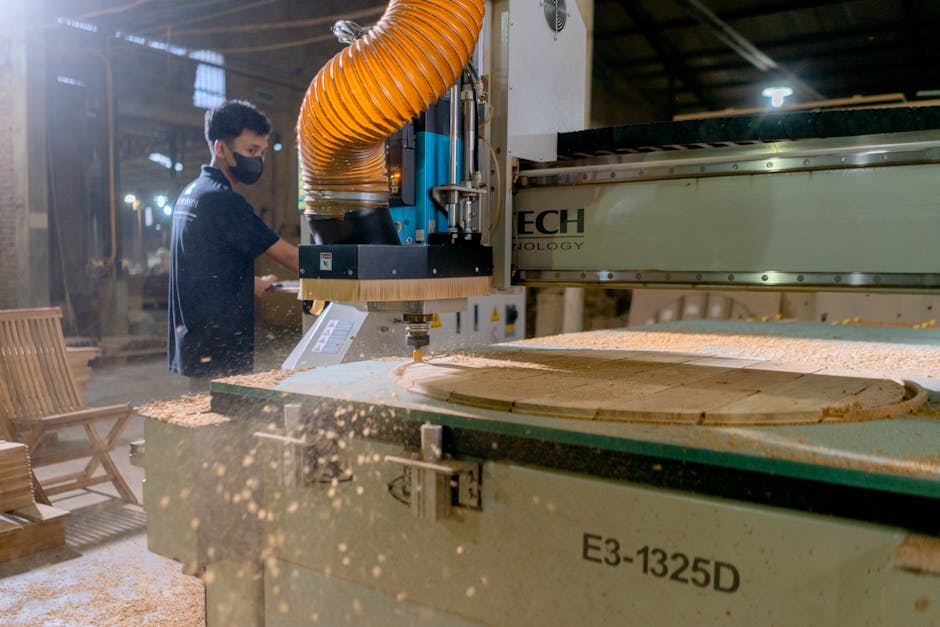
Managing concurrent projects is a significant challenge in a busy millwork shop. Effective time tracking provides real-time visibility into each project's progress. This allows monitoring time spent on cutting, assembly, finishing, and installation.
Cutting: Time on CNC machines or manual saws.
Assembly: Hours for joining components.
Finishing: Labor for sanding, staining, and sealing.
Installation: On-site time for fitting and securing.
Identifying bottlenecks in your production workflow becomes easier with precise data. This allows for proactive adjustments rather than reactive problem-solving, preventing delaysthat slow project completion.
Using Production Data to Improve Job Costing
Accurate time tracking is foundational for better project quotes and overall profitability. It allows woodworkers to compare estimated versus actual production time for each job. This comparison helps refine pricing strategies, ensuring that complex custom jobs are not underpriced. Building a historical database of production benchmarks is essential for future accuracy. This data enables more competitive, yet profitable, bids. Poor time management costs organizations an estimated$588 billion annually.

Photo by Tima Miroshnichenko
Digital Tools That Transform Production Time Management
Manual methods like spreadsheets often fail to provide the real-time insights needed for efficient production tracking. Digital tools offer a more robust solution. Key features to look for in woodworking production software include job-specific time tracking, mobile accessibility, and integration with job costing. Millbase is designed to streamline time tracking for millwork shops with integrated job costing. It offers mobile-friendly time tracking for shop floor and installation teams, ensuring data is captured accurately and efficiently. Companies implementing AI-based time tracking tools reportup to 32% improvement in work-time efficiency.
Manual vs. Digital Production Time Tracking Methods
This table compares traditional time tracking approaches with modern digital solutions, helping woodworkers understand which method best fits their shop's needs and growth stage.
Method | Accuracy | Real-Time Visibility | Job Costing Integration | Scalability | Best For |
|---|---|---|---|---|---|
Paper timesheets | Low | None | Manual | Poor | Very small, low-volume shops |
Spreadsheet tracking | Medium | Delayed | Manual/Basic | Limited | Small shops with simple projects |
Basic time clock systems | Medium-High | Limited | Separate | Moderate | Shops needing basic payroll tracking |
Integrated production software (like Millbase) | High | Full | Seamless | Excellent | Growing and established millwork shops |
Manual job tracking boards | Low | Visual only | None | Very Poor | Shops resistant to digital tools (not recommended) |

Photo by Tima Miroshnichenko
Implementing Production Time Management in Your Shop
Successful implementation of new time management systems requires team buy-in. Training production staff on these systems is crucial for adoption. Set realistic goals and measure improvement over time.
Communicate the benefits of accurate tracking to the team.
Provide comprehensive training on new software or processes.
Start with a pilot project to iron out any issues.
Regularly review data and provide feedback to staff.
Celebrate successes to reinforce positive behavior.
Avoid micromanagement by focusing on outcomes and accountability, empowering your team to manage their time effectively.
Taking Control of Your Production Schedule
Knowing exactly where time goes provides a significant competitive advantage. This transparency allows for more accurate bidding and improved project delivery. Better time management improves both profitability and work-life balance for shop owners and employeesby optimizing schedules. The next step for implementing production time tracking in your millwork shop involves evaluating current processes and exploring integrated solutions. For example, a 15-person architectural millwork shop saw full ROI in 24 months after a $300K investment in CNC and software, driven by labor cost reductionsand increased capacity.
Photo by HONG SON
Key Takeaways
Accurate time tracking prevents profit erosion and project delays.
Understanding true production capacity requires breaking down machine, labor, and total cycle times.
Digital tools like Millbase offer real-time visibility and seamless integration for job costing.
Implementing new systems requires team buy-in and proper training.
Effective time management provides a competitive edge and improves profitability.
Poor time management costs organizations an estimated $588 billion annually across industries.

Photo by Yaroslav Shuraev
Conclusion
Mastering production time management is no longer optional for woodworking businesses; it is a fundamental pillar of success. By embracing accurate tracking, understanding capacity, and leveraging digital tools, shops can transform their operations. This leads to enhanced profitability, more precise project bids, and greater customer satisfaction. Investing in robust production time management systems like Millbase empowers woodworkers to gain control, optimize their workflow, and secure a competitive future.
Frequently Asked Questions
How do I calculate accurate production time for custom millwork projects?
To calculate accurate production time, break down projects into distinct phases: cutting, assembly, finishing, and installation. Track historical data for similar projects and allocate buffer time (e.g., 15%) to account for the inherent complexities and potential unforeseen issues of custom work as suggested by industry experts.
What is the best way to track production time across multiple jobs in a woodworking shop?
The best way to track production time across multiple jobs is by using integrated production software like Millbase. These solutions offer real-time tracking, often with mobile accessibility, allowing shop floor and installation teams to log time by specific tasks and projects, overcoming the limitations of manual methods.
How much time should I budget for different phases of a millwork project?
Typical time allocations for millwork projects can vary, but a general guideline might be: cutting (20-25%), assembly (30-35%), finishing (25-30%), and installation (10-15%). These percentages should be adjusted based on project complexity, material type, and whether automation (like CNC machines) is used, which can reduce production time significantly by up to 30%.
Why is production time management important for millwork profitability?
Production time management is crucial for profitability because it enables accurate job costing, allowing you to create competitive yet profitable quotes. It reduces material waste through optimized processes and helps identify and eliminate bottlenecks, ensuring projects are completed on time and within budget, which ultimately increases the number of jobs your shop can handle efficiently and improves your bottom line.
What features should I look for in production time management software for woodworking?
Look for software that offers job-specific time tracking, mobile accessibility for convenience on the shop floor, seamless integration with job costing and accounting platforms, and real-time reporting for immediate insights. Millbase provides these essential features, making it a comprehensive solution for woodworking shops.
How do I get my woodworking team to actually track their production time consistently?
To ensure consistent time tracking, implement an easy-to-use system (like a mobile-friendly app), clearly communicate the benefits to the team (e.g., more realistic deadlines, better workload management), and provide thorough training. Lead by example, and maintain accountability without micromanagement, focusing on how accurate data benefits everyone as recommended by experts.