What Makes Job Costing Software Essential for Custom Millwork
Written by
Coby Birenbaum
on
2 janvier 2026

Custom millwork operates on thin margins, where precise job costing is crucial for distinguishing between survival and thriving. Unlike mass production, every custom job presents unique variables in material, labor, and complexity. This inherent variability makes accurate financial tracking paramount.
Job costing software is a specialized system that tracks all expenses associated with individual projects, providing real-time financial visibility rather than reactive insights. It transforms how millwork shops manage their finances, enabling proactive decision-making and improved profitability.
The Profitability Challenge in Custom Millwork
The custom millwork industry faces significant profitability challenges due to its bespoke nature. Each project is unique, involving distinct designs, materials, and labor requirements, making standardized costing nearly impossible through manual methods.
While the U.S. millwork market is projected to grow from $12.5 billion in 2024 to $18.4 billion by 2032, with a CAGR of 5.1% from 2025-2032, navigating fluctuating costs and maintaining margins remains complex. Millwork manufacturing done well can generate big profits, but only with accurate cost management as noted by Misura Group.
The True Cost of Manual Job Tracking
Manual job tracking using spreadsheets and paper logs introduces numerous inefficiencies and hidden costs. These traditional methods are prone to errors and provide delayed insights, hindering timely decision-making.
Manual data entry error rates above the acceptable 1% can cost companies millions, with poor data quality causing $15 million in average annual losses per firm. Unplanned downtime, often exacerbated by manual tracking, costs manufacturing facilities an average of $260,000 per hour across industries.
Spreadsheet limitations lead to version control chaos and formula errors.
Hidden labor costs are frequently omitted from job profitability calculations.
Material waste and offcut tracking gaps erode margins, with automation reducing waste by 15–20%.
Delayed financial insights mean discovering unprofitable jobs only after completion, impacting future bids.
Core Capabilities That Make Job Costing Software Essential
Job costing software provides critical capabilities that transform financial management in custom millwork. It offers real-time data and automation, which are vital for accurate cost allocation and profitability analysis.
These capabilities enable millwork shops to move beyond guesswork, ensuring every project is priced and executed for maximum profit.
Real-time labor tracking ties hours directly to specific jobs and work orders, improving accuracy.
Automated material cost allocation includes waste factors and yield calculations, reducing hidden expenses.
Overhead distribution models accurately reflect true job costs, ensuring comprehensive pricing.
Integration with purchasing and inventory captures actual costs, not just estimates, for precise financial reporting.
Capability | Manual Tracking (Spreadsheets/Paper) | Job Costing Software (Millbase) |
|---|---|---|
Labor cost accuracy and real-time visibility | Prone to errors, delayed entry, difficult to reconcile actual vs. estimated hours. | Real-time tracking per job/task, automated payroll integration, immediate variance reporting. |
Material waste tracking and cost allocation | Inaccurate, often based on estimates, significant leakage from offcuts and unrecorded waste. | Automated waste factor calculations, digital nesting integration, precise material allocation to jobs. |
Estimation accuracy based on historical data | Relies on memory or fragmented records, making historical analysis difficult and prone to bias. | Centralized historical job data, performance benchmarks, AI-driven pricing suggestions. |
Time required for job profitability analysis | Days or weeks to compile data, often only after job completion. | Instant, ongoing profitability dashboards, real-time alerts for budget overruns. |
Overhead distribution and true cost calculation | Often generalized or underestimated, leading to underpriced jobs. | Configurable overhead allocation methods (e.g., by labor, machine hours), accurate true cost per job. |
Integration with production scheduling | Disconnected, manual updates required, leading to scheduling conflicts and delays. | Seamless data flow with production software, real-time schedule adjustments based on cost impact. |
How Job Costing Software Improves Estimation Accuracy
Accurate estimation is the bedrock of profitability in custom millwork, and job costing software significantly enhances this critical function. It replaces guesswork with data-driven insights.
The construction estimating software market is expanding, growing from $1.56 billion in 2025 to $1.72 billion in 2026, reflecting the industry's investment in digital tools. Owners transitioning from generic estimates to localized, primary-source cost data can reduce total project costs by 30–40% by eliminating uncertainty premiums.
Historical job data creates pricing benchmarks based on actual performance, not assumptions.
Pattern recognition identifies which job types, materials, or complexities affect profitability most.
Estimation templates built from real cost data reduce quote preparation time by 60-70%.
Confidence in pricing allows competitive bidding without sacrificing margins, ensuring profitable contracts.
Production Efficiency Gains Beyond Financial Tracking
Job costing software extends its value beyond pure financial tracking by providing insights that enhance production efficiency. It helps identify bottlenecks and optimize resource allocation.
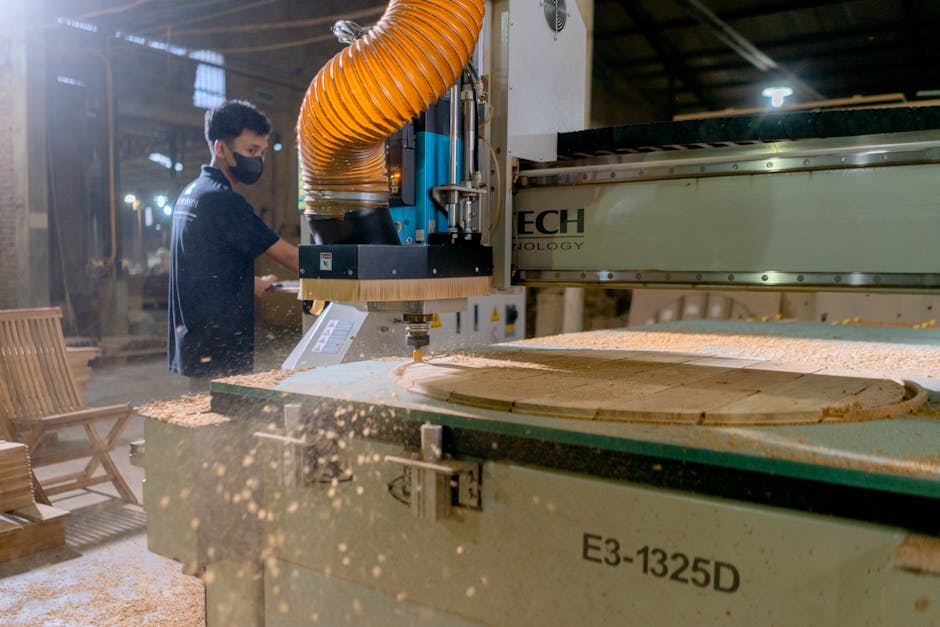
A Charlotte, NC casework shop reported a 30% decrease in production time by integrating Microvellum software with CNC machines. This demonstrates how software-driven insights translate directly into operational improvements.
Labor hour analysis helps identify bottlenecks by station and job phase.
Resource allocation optimization is based on real capacity and job requirements.
Schedule adherence tracking reveals where timeline slippage costs money.
Performance metrics directly tie production efficiency to profitability.
Why Millbase Leads in Millwork Job Costing
Millbase stands out as a leading job costing platform because it is purpose-built for the unique demands of millwork workflows. Our woodworking software is designed for the shop floor, not just the accounting office.
We provide seamless integration of estimating, production tracking, and financial analysis within a single platform. This comprehensive approach ensures that millwork shops gain unparalleled visibility into their operations at every stage.
Millbase is purpose-built for millwork workflows, not adapted from generic manufacturing software.
It features an intuitive interface designed for shop floor reality, not just office accounting.
The platform offers seamless integration of estimating, production tracking, and financial analysis.
Real-time dashboards show job profitability as work progresses, not weeks later.
Implementation ROI: What to Expect
Implementing job costing software generates significant return on investment through improved efficiency and profitability. The benefits quickly outweigh the initial investment.
RCS Millwork, for example, increased profitability from 1% to 10% on $17 million in revenue after adopting an ERP system for job costing. A 15-person architectural millwork shop achieved full ROI in 24 months on a $300K investment in CNC and software integration.
Typical payback period of 3-6 months through improved estimation and cost control.
Margin improvement of 2-5 percentage points within the first year of adoption.
Time savings of 10-15 hours per week previously spent on manual tracking and reconciliation.
Strategic decision-making capability that transforms business planning.
Key Takeaways
Custom millwork requires precise job costing due to unique project variables.
Manual tracking leads to significant hidden costs and delayed insights.
Job costing software provides real-time visibility into labor, materials, and overhead.
It drastically improves estimation accuracy using historical data and pattern recognition.
Operational efficiency gains extend beyond finance, impacting production and scheduling.
Millbase offers a purpose-built solution for millwork, integrating all critical functions.
Expect rapid ROI, including margin improvements and substantial time savings.
Conclusion: From Cost Center to Profit Driver
Job costing software is no longer a luxury but an essential infrastructure for any custom millwork shop serious about profitability. It shifts operations from guessing to knowing, providing accurate, real-time financial visibility.
This data-driven approach enables strategic growth decisions and offers a competitive advantage by understanding true costs better than competitors. Embrace job costing software to transform your custom millwork business into a highly efficient and profitable enterprise.
Frequently Asked Questions
What is job costing software and why do millwork shops need it?
Job costing software is a system that tracks all costs associated with individual projects, including labor, materials, and overhead. Custom millwork shops need it because each job is unique, making accurate, project-level cost tracking essential for understanding true profitability and making informed pricing decisions, unlike standardized production manufacturing.
How much does job costing software cost for a millwork shop?
The cost of job costing software for millwork shops can vary widely, typically ranging from a few hundred to several thousand dollars per month, depending on features and user count. Millbase offers flexible pricing tailored to the size and needs of your operation, with a typical payback period of 3-6 months through improved margins and reduced waste.
What is the difference between job costing and regular accounting software?
Regular accounting software tracks the overall financial health of a business, managing accounts payable, receivables, and general ledgers. Job costing software, however, focuses on the profitability of individual projects, providing granular detail on costs and revenues per job. Millwork shops require job costing for project-level visibility to identify which specific types of work are profitable and which are not, often integrating with general accounting systems.
How long does it take to implement job costing software in a millwork shop?
Implementing job costing software typically takes 2-4 weeks for initial setup and data migration, with full adoption and optimization occurring over 1-2 months. Modern platforms like Millbase are designed for intuitive onboarding, and we provide training for both shop floor and office staff to ensure a smooth transition.
Can job costing software integrate with our existing tools?
Yes, job costing software like Millbase is designed to integrate with various existing tools common in millwork shops, such as accounting software (e.g., QuickBooks), CAD systems, and inventory management platforms. Seamless data flow is crucial to avoid double-entry and ensure consistent information across your operations, and Millbase offers robust integration capabilities and API access for custom connections.
What ROI should we expect from job costing software?
You can expect significant ROI from job costing software, including a 2-5 percentage point improvement in profit margins within the first year, and a typical payback period of 3-6 months. Users often save 10-15 hours per week on manual tracking and reconciliation, and see estimation time reduced by 60-70%, leading to more accurate bids and increased profitability.