Protecting Profit Margins in Millwork: Effective Strategies
Written by
Coby Birenbaum
on
February 19, 2026

In the competitive millwork industry, maintaining healthy profit margins is crucial for business sustainability and growth. Millwork shops frequently face challenges from fluctuating material costs, labor shortages, and intense competition, making strategic cost management essential.
Profit margin protection in millwork involves implementing systems and strategies to identify and mitigate cost leakages, optimize operational efficiency, and ensure accurate pricing for custom manufacturing projects.

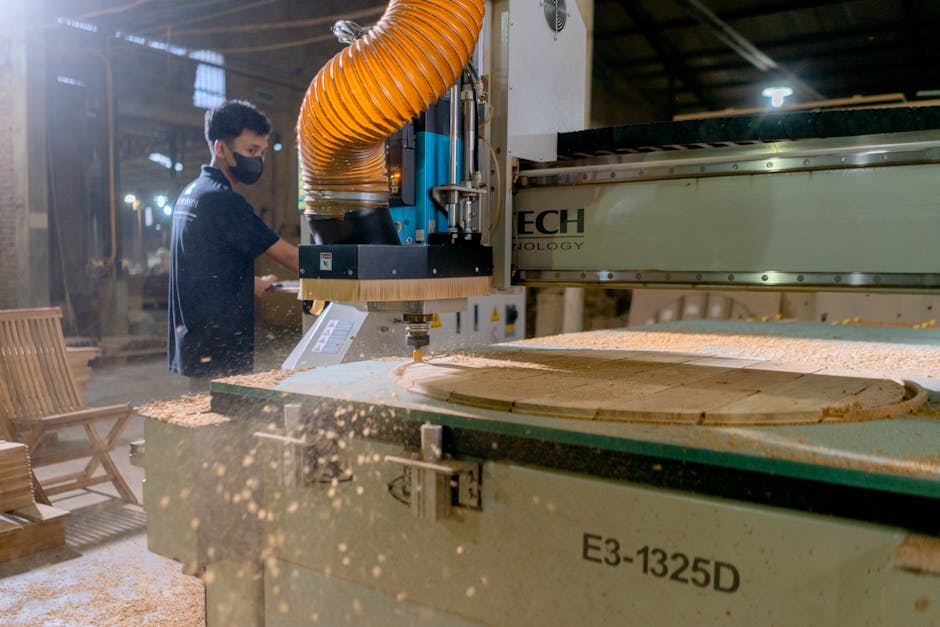
Photo by Đậu Photograph
Why Profit Margins Matter in Millwork
Profit margins are the lifeblood of any millwork business, directly impacting its ability to invest, innovate, and expand. Thin margins can quickly erode a company's financial stability, especially in an industry facing market contractions in some regions.
The U.S. millwork market, for instance, is projected to be around $38.5 billion in 2026, but with a declining CAGR of -1.4% from 2021-2026 according to IBISWorld. Inefficiency and poor tracking in custom manufacturing compound these pressures, turning potentially profitable jobs into financial losses.
Strategy 1: Implement Accurate Job Costing Systems
Accurate job costing systems are essential for margin protection because they provide real-time visibility into the true costs of each project. Tracking labor, materials, and overhead per job reveals actual profitability versus estimations.
Software plays a critical role in automating cost capture, reducing estimation errors, and providing detailed financial insights. A 15-person architectural millwork shop, for example, achieved full ROI on a $300K investment in CNC machines and software integration within 24 months as reported by Woodjobs.com.
Track all direct costs: labor hours, material quantities, and subcontractor fees.
Allocate indirect costs: overheads like rent, utilities, and administrative salaries to specific jobs.
Utilize real-time data: Monitor expenses as they occur, not just at project completion.
Identify variances: Compare actual costs against estimated costs to pinpoint discrepancies.
Millbase's job costing platform helps millwork shops track every dollar, providing the data needed to make informed decisions and prevent budget overruns as highlighted by ConstructionOwners.com.
Strategy 2: Optimize Material Purchasing and Waste Reduction
Optimizing material purchasing and reducing waste directly impacts profitability by lowering input costs. Strategies include strategic bulk purchasing and implementing cut optimization software.
Manufacturers should prioritize local and regional sourcing to reduce exposure to tariffs, delays, and extreme weather, improving logistics reliability according to M. Holland. This approach ensures materials are used efficiently, minimizing scrap.
Implement cut optimization software to minimize material waste, potentially reducing waste by up to 20% in millwork operations.
Track yield rates and identify patterns in material loss to address inefficiencies.
Build strong relationships with suppliers for better pricing and favorable terms.
Evaluate materials routinely for cost-optimization opportunities without compromising performance.

Photo by Tima Miroshnichenko
Strategy 3: Improve Production Time Management
Improving production time management prevents delays that directly erode profit margins through increased labor costs and missed deadlines. Effective scheduling and time tracking are crucial.
Time tracking systems help identify bottlenecks and underperforming workstations, allowing for targeted improvements as advised by Epoptia. Scheduling optimization maximizes machine and labor utilization, ensuring projects stay on track.
Implement time tracking software to monitor labor hours per task.
Use data to set realistic timelines and avoid costly rush charges.
Optimize scheduling to maximize machine and labor utilization.
Continuously analyze production flow to identify and eliminate bottlenecks.
Strategy 4: Reduce Rework and Quality Issues
Reducing rework and quality issues is vital because these problems incur significant hidden costs, including wasted materials, additional labor, and production delays. Rework costs can range between 4% and 9% of total project cost in related sectors like construction per industry studies.
Implementing quality checkpoints throughout production and training staff on precision can significantly reduce these expensive errors. Digital work orders also reduce miscommunication, which is a common cause of rework.
Establish quality checkpoints at critical stages of production.
Provide ongoing training to staff on precision and attention to detail.
Utilize digital work orders to minimize miscommunication.
Implement prototype validation and process analysis into standard workflows to prevent costly mid-project changes as recommended by Plastic Components Inc.

Photo by Ahmet Çiftçi
Strategy 5: Strategic Pricing and Quote Accuracy
Strategic pricing and accurate quotes are fundamental to protecting profit margins by ensuring every project is profitable from the outset. Moving beyond simple cost-plus pricing to value-based strategies can capture more value.
Accurate quotes that account for all project variables prevent underbidding and unexpected losses. Measurement errors in millwork are particularly expensive due to fit failures and installation issues as noted by TrueCADD.
Build accurate quotes that account for all project variables, including potential risks.
Use historical data to price similar jobs more accurately, avoiding vague or inconsistent pricing as clients expect transparency.
Understand when to decline low-margin projects that could drain resources.
Implement multi-stage quality control in shop drawings to catch measurement errors early as advised by A2Z Millwork.
Strategy 6: Streamline Administrative and Overhead Costs
Streamlining administrative and overhead costs identifies and reduces hidden expenses that often drain profit margins. Automating routine tasks and consolidating software tools can lead to significant savings.
Reducing time spent on manual data entry and paperwork frees up valuable resources. Cloud-based job costing software, for example, helps reduce administrative overhead by automating expense categorization.
Automate invoicing, inventory tracking, and reporting processes.
Reduce time spent on manual data entry and paperwork.
Consolidate software tools to minimize subscription costs and improve integration.
Regularly review administrative workflows to identify areas for efficiency gains.

Photo by Tima Miroshnichenko
The following table compares the six key strategies for protecting profit margins, showing their implementation difficulty, time to see results, and typical margin improvement potential. This helps millwork shop owners prioritize which strategies to implement first based on their specific situation.
Strategy | Implementation Difficulty | Time to Results | Typical Margin Improvement | Best For |
|---|---|---|---|---|
Accurate Job Costing Systems | Medium to High | 3-6 Months | 5-10% | Shops with frequent budget overruns |
Material Purchasing Optimization | Medium | 2-4 Months | 3-7% | Businesses with high material costs |
Production Time Management | Medium | 3-6 Months | 4-8% | Shops experiencing frequent delays or bottlenecks |
Reducing Rework/Quality Issues | Medium to High | 6-12 Months | 5-15% | Operations with high scrap rates or customer complaints |
Strategic Pricing | Low to Medium | 1-3 Months | 2-5% | Businesses underbidding or struggling with profitability per job |
Streamlining Administrative Costs | Low to Medium | 1-3 Months | 1-3% | Shops with significant manual processes or redundant software |

Photo by Mehmet Turgut Kirkgoz
Key Takeaways
Accurate job costing provides essential real-time financial insights.
Optimizing material purchasing and reducing waste directly lowers input costs.
Efficient production time management prevents costly delays and maximizes resource utilization.
Minimizing rework and quality issues significantly reduces hidden expenses.
Strategic and accurate pricing ensures projects are profitable from the start.
Streamlining administrative tasks cuts overhead and improves operational efficiency.
Conclusion: Building Sustainable Profitability
Protecting profit margins in millwork requires a systematic approach, moving beyond intuition to data-driven decision-making. By implementing strategies like accurate job costing, optimizing material use, and streamlining operations, millwork shops can significantly improve their financial health.
Technology investments, particularly in woodworking software and job costing platforms like Millbase, often pay for themselves through enhanced efficiency and margin improvement. These tools provide the control and visibility necessary to navigate market challenges and build sustainable profitability for the future.
Frequently Asked Questions
What is a healthy profit margin for a millwork shop in 2026?
While specific 2026 net profit margins for millwork are not publicly available, industry benchmarks for overall woodworking operations often target a gross margin of 85% or higher according to Financial Models Lab. Factors like shop size, specialization, and regional market conditions significantly influence actual margins, with smaller custom shops often aiming for higher percentages to cover overheads.
How do I know if my job costing is accurate enough?
Signs of inaccurate job costing include frequent budget overruns, unexpected losses on completed jobs, and an inability to pinpoint the true profitability of individual projects. Accurate job costing provides clear, real-time data on labor, materials, and overhead for every job, allowing for precise variance analysis. Woodworking software and job costing platforms help achieve this precision by automating data capture and reporting.
What is the biggest profit killer in custom millwork businesses?
The biggest profit killer in custom millwork businesses is often a combination of rework and inaccurate estimates. Rework incurs significant hidden costs, including wasted materials, additional labor, and production delays as highlighted by Plastic Components Inc. Inaccurate estimates lead to underbidding or mispricing, ensuring a project is unprofitable before it even begins.
Is job costing software worth the investment for small millwork shops?
Yes, job costing software is unequivocally worth the investment for small millwork shops. A 15-person architectural millwork shop achieved full ROI on a $300K investment in CNC machines and software integration within 24 months as reported by Woodjobs.com. Solutions like Millbase are designed for millwork shops of all sizes, offering real-time tracking that helps identify and prevent profit leakages, often providing a rapid payback through cost savings and improved efficiency.
How can I reduce material waste without compromising quality?
You can reduce material waste without compromising quality by implementing cut optimization software, improving drafting accuracy, and meticulously tracking yield rates. Precision-based drafting and modular prefabrication also reduce waste by relying on accurate templates as noted by BluEntCAD. These strategies ensure optimal material utilization while maintaining high standards of craftsmanship.
What should I do if a project is losing money halfway through?
If a project is losing money halfway through, immediately conduct a thorough review of job costs versus estimates to identify the specific causes. Communicate transparently with the client about any necessary scope adjustments or change orders, if appropriate for the contract. Implement real-time job costing to prevent future occurrences, allowing for early intervention and corrective action before losses become substantial.