Top 7 Software Tools for Job Costing in Millwork
Written by
Coby Birenbaum
on
February 18, 2026

Millwork shop owners and production managers face increasing pressure to maintain profitability in a competitive market. Accurate job costing is the backbone of financial health for any millwork business, enabling precise bidding, efficient resource allocation, and robust profit margins. Without it, shops risk significant losses from material waste, untracked labor, and unforeseen overhead. The right job costing software transforms these challenges into opportunities, providing real-time visibility and control over project finances. It helps prevent cost overruns and ensures every job contributes positively to the bottom line. Accurate costing is especially critical given that the U.S. millwork industry saw a market size decline at a CAGR of 1.4% from 2021-2026.
1. Millbase - Complete Job Costing Platform for Millwork Shops
Millbase is purpose-built for millwork and custom woodworking, offering a comprehensive job costing platform that addresses the unique needs of the industry. It provides real-time tracking of materials and labor, ensuring transparency from estimate to installation. Millbase excels in:
Real-time job costing with integrated material and labor tracking.
Production time management features to optimize shop floor efficiency.
Tools for waste reduction and accurate inventory management.
Seamless integration with shop floor operations and installation coordination.
Millbase offers transparent pricing and a strong ROI for small to mid-sized millwork shops, making it a leading choice for those seeking dedicated woodworking software.
2. JobBOSS - Manufacturing ERP with Job Costing
JobBOSS² is a comprehensive ERP solution for custom manufacturers, including millwork operations. It integrates job costing capabilities within a broader manufacturing suite, offering robust financial and operational control. Key features include:
Real-time labor and material cost capture, with users reporting accurate profitability calculations post-implementation.
Bar-coded travelers to eliminate manual time tickets and improve data accuracy.
Integration with various payroll and accounting systems like QuickBooks and ADP.
JobBOSS is best suited for larger operations that require full ERP functionality and are prepared for a learning curve and significant implementation. TrustRadius scores it 9.0/10 for project cost control.
3. Epicor for Manufacturing - Enterprise Job Cost Management
Epicor Kinetic provides an enterprise-grade solution for complex manufacturing operations, including large millwork manufacturers. It offers advanced job costing with multi-location support and extensive customization options. Epicor's strengths include:
Advanced job costing capabilities within a comprehensive ERP suite.
Support for multi-location operations and complex supply chains.
Significant ROI, with a Forrester study showing 270% ROI and a 20-month payback period for composite manufacturing organizations.
This solution is ideal for large millwork manufacturers with multiple facilities and substantial budgets, as it involves a higher investment and longer implementation timeline.

Photo by cottonbro studio
4. QuickBooks with Manufacturing Add-ons
QuickBooks is a familiar accounting platform that can be extended for job costing in millwork through various add-ons. It offers an affordable entry point for basic job tracking needs. QuickBooks' job costing capabilities are enhanced by:
Integration with manufacturing add-ons like Katana MRP for real-time inventory and production planning per Method CRM.
Project profitability tracking for materials, labor, and overhead.
Stronger item-level and project reporting in QuickBooks Desktop Enterprise, making it suitable for heavy costing requirements.
While suitable for shops already using QuickBooks for accounting, its limitations for production-specific millwork workflows mean it often requires additional integrated solutions.
5. Fishbowl Manufacturing - Inventory-Focused Job Costing
Fishbowl Manufacturing provides robust inventory management features alongside job costing capabilities. It emphasizes material tracking and integrates with QuickBooks for accounting workflows. Fishbowl offers:
Strong inventory management, crucial for millwork's varied material needs.
Integration with QuickBooks to streamline accounting.
Focus on material tracking, helping to manage the $38.5 billion U.S. millwork market.
This solution is a good fit for growing millwork operations that prioritize material control and need mid-market pricing.
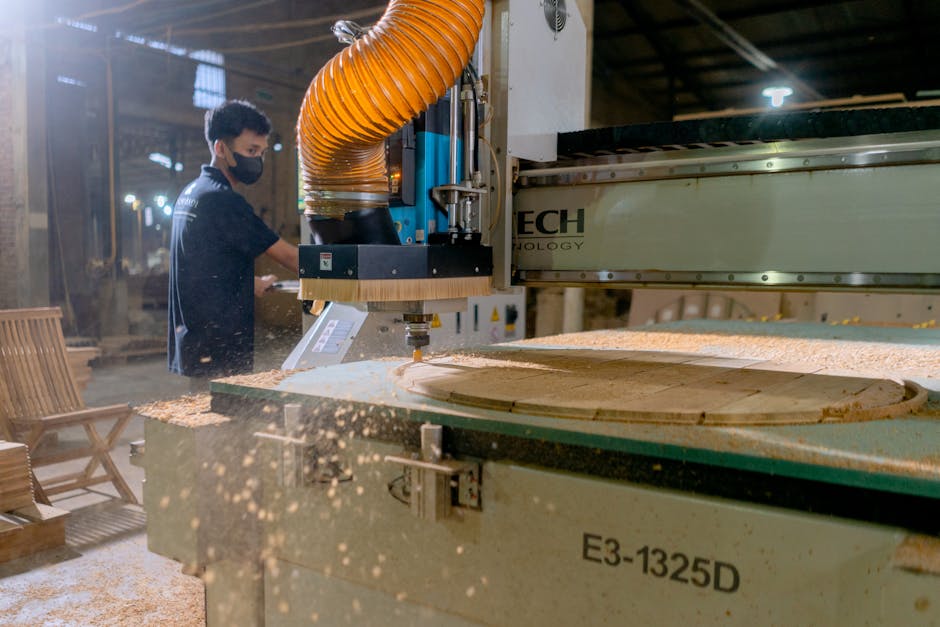
Photo by Mandiri Abadi
6. Odoo Manufacturing Module - Open Source Flexibility
Odoo's Manufacturing Module is a customizable open-source platform that includes job costing functionalities. It offers flexibility for shops willing to invest in customization. Odoo's advantages include:
Open-source nature, allowing for extensive customization.
Module-based approach for gradual implementation.
Cost-effective for shops with in-house IT resources or developer support, with manufacturing-specific implementation costs ranging from $5,000 to $25,000.
Requires technical expertise or dedicated developer support for full optimization, making it suitable for shops with the resources to manage an open-source system.
7. Spreadsheet-Based Custom Solutions
Spreadsheet-based custom solutions, typically using Excel or Google Sheets, offer maximum flexibility for job costing. They are often the starting point for very small shops. Features of spreadsheet solutions:
Full customization of templates and formulas.
No direct software cost, leveraging existing tools.
Immediate accessibility for basic tracking needs.
However, these solutions require manual data entry, carry a higher risk of errors, and lack automation, making them time-intensive and only suitable for very small shops with simple needs.

Photo by Markus Winkler
Job Costing Software Comparison for Millwork Shops
This table compares the seven software tools across key criteria that matter most to millwork manufacturers: industry fit, ease of use, implementation time, and pricing. Use this to quickly identify which solutions match your shop's size and needs.
Software | Best For | Millwork-Specific Features | Implementation Time | Pricing Range |
|---|---|---|---|---|
Millbase | Small to mid-sized millwork shops | Real-time material/labor, production management, waste reduction, shop floor integration | 2-4 weeks | Mid-range (subscription) |
JobBOSS | Larger custom manufacturers | Real-time cost capture, bar-coded travelers, broad ERP integration | 2-3 months | High (perpetual license + maintenance) |
Epicor Manufacturing | Large millwork manufacturers (multi-location) | Advanced ERP, multi-location support, deep financial management | 6-12 months | Enterprise (high investment) |
QuickBooks + Add-ons | Small shops already using QuickBooks | Basic job tracking, enhanced by manufacturing add-ons (e.g., Katana MRP) | Weeks (for add-on setup) | Low-Mid (QB subscription + add-on fees) |
Fishbowl Manufacturing | Growing mid-market operations (inventory-focused) | Strong inventory management, QuickBooks integration, material tracking | 1-2 months | Mid-range (perpetual license + maintenance) |
Odoo Manufacturing | Shops with IT resources seeking customization | Customizable open-source, BOM management, production planning | 8-16 weeks | Low-Mid (subscription + implementation costs ranging from $15,000 to $60,000) |
Spreadsheet Solutions | Very small shops with simple needs | Basic tracking, custom formulas | Days (setup) | Free (software-wise) |
How to Choose the Right Job Costing Software for Your Shop
Choosing the right job costing software requires a careful assessment of your millwork shop's unique needs. Consider your shop size, the complexity of your projects, and your growth plans. Evaluate the following:
Assess your shop's size, complexity, and future growth projections to match software scalability.
Consider integration needs with existing accounting, design, or shop floor systems.
Evaluate the typical implementation time and training requirements for your staff.
Calculate the potential ROI based on improved margins and efficiency gains.
Automation with software can cut material waste by up to 20%, significantly boosting profitability.

Photo by Christina Morillo
Key Takeaways
Accurate job costing is essential for protecting profit margins in millwork.
Millbase offers a millwork-specific solution with real-time tracking and production management.
ERP systems like JobBOSS and Epicor suit larger, more complex operations.
QuickBooks with add-ons and Odoo provide flexible, budget-conscious options.
Spreadsheet solutions are basic but lack automation and carry higher error risks.
The right software can deliver significant ROI through waste reduction and efficiency improvements.
Conclusion
Job costing software is no longer a luxury but a necessity for millwork shops aiming to protect and grow their profit margins. The millwork industry, with its unique material and labor challenges, demands specialized tools to ensure every project is profitable. While options range from basic spreadsheets to enterprise-level ERPs, solutions like Millbase offer the optimal balance of millwork-specific features, usability, and cost-effectiveness for small to mid-sized shops. By meticulously tracking every expense, from raw materials to labor hours, millwork businesses can avoid the common pitfalls that erode profitability. Assessing your current costing accuracy and exploring tailored software solutions is a critical next step. We recommend requesting demos from your top 2-3 options to see how they fit your shop's specific workflow.
Frequently Asked Questions
What is the best job costing software for small millwork shops?
For small to mid-sized millwork shops, Millbase is typically the best choice due to its millwork-specific features, ease of implementation, and balanced pricing. QuickBooks can serve as a budget alternative, but it has limitations and requires manufacturing add-ons.
How much does job costing software cost for millwork manufacturing?
Costs vary widely, from free spreadsheet solutions to enterprise systems costing $10,000+ annually. Millbase offers mid-range pricing with strong ROI, while Odoo can be cost-effective for shops with IT resources. It's crucial to weigh the cost against the value of margin protection.
How does job costing software protect profit margins in millwork?
Job costing software protects profit margins by providing real-time tracking of expenses, preventing cost overruns, and ensuring accurate material and labor allocation. This data visibility allows for better pricing decisions, reduces waste, and improves overall operational efficiency.
Can I use QuickBooks for millwork job costing?
Yes, but QuickBooks has limitations for millwork-specific job costing. It often requires manufacturing add-ons to handle Bills of Material, production scheduling, and detailed inventory. While good for accounting, it's not a purpose-built production management solution like Millbase.
What features should I look for in millwork job costing software?
Key features include real-time material and labor tracking, production time management, waste tracking, integration with shop floor operations, robust reporting and margin analysis, and user-friendliness for shop staff. These features ensure accurate data capture and actionable insights.
How long does it take to implement job costing software in a millwork shop?
Implementation timelines vary. Millbase and similar specialized tools can be implemented in 2-4 weeks. Mid-market ERP solutions typically take 2-3 months, while enterprise-level systems might require 6-12 months. Faster implementation generally leads to quicker ROI.